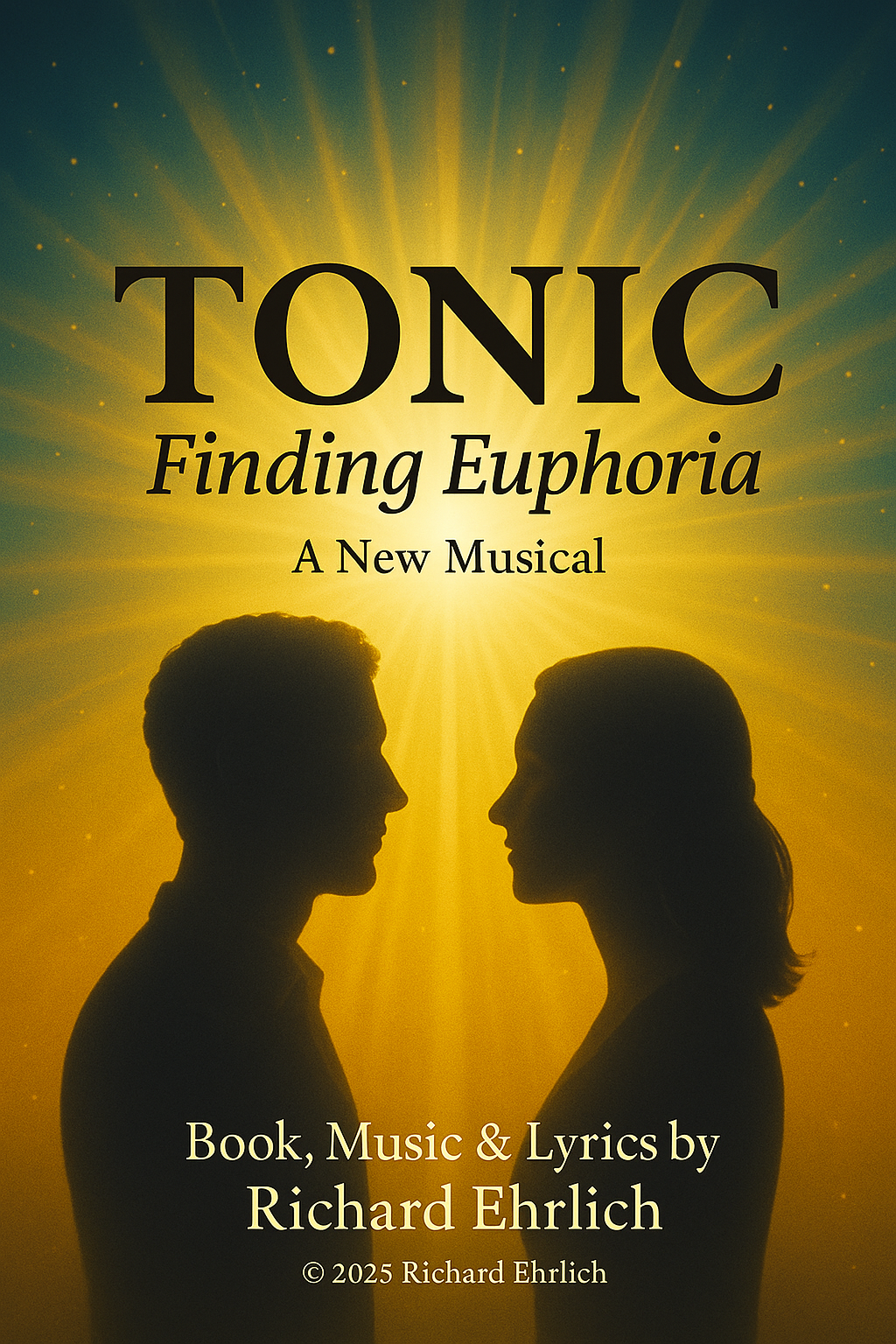
TONIC
Finding Euphoria
A New Musical
Book, Music & Lyrics by Richard Ehrlich
© 2025 Richard Ehrlich
Based on the GoYou! Book Series
Music demos created for reference only and are not intended for commercial distribution.
Playlist
Download all songs (ZIP)Tap a song (when audio is live) to set it as Now Playing.
-
The Tonic Note
Opening invocation — remembering the sound beneath the noise.
-
Bring It All
Permission anthem. You don't have to be calm to be here.
-
The Static
Playful, anxious, the comedy of overthinking.
-
The Stories We Carry
Vulnerable ballad about shared humanity.
-
Breathe It Out
Grounding and release.
-
If You Were My Friend
Self-compassion at the center of the show.
-
Before the World Told You
Rediscovering innocence and joy.
-
I Choose Me
Empowerment, earned.
-
Euphoria
Quiet finale — where the noise becomes music.
Script
Download Script PDFTONIC: Finding Euphoria
A Musical Experience
Book, Music & Lyrics by Richard Ehrlich
© 2025 Richard Ehrlich
60 pages • 2 acts • 10 scenes • 9 songs
The complete script for TONIC: Finding Euphoria is available as a downloadable PDF above. The 60-page script includes:
- Complete dialogue and stage directions for all 10 scenes
- Full song placement and musical context
- Character descriptions and casting notes
- Production notes and participatory elements
- All 9 musical numbers with context
An 80-minute participatory musical experience that guides audiences from anxiety to inner peace through story, song, and shared breath. Two Voices and an ensemble of six archetypes create a space where it's safe to bring your mess, name your noise, and remember the calm, even feeling that's been there all along—your tonic note. Unlike traditional musicals where you watch characters transform, TONIC invites you into your own transformation. This is theater as ritual. Performance as permission.
Running Time
80 minutes, no intermission
Act I: ~43 minutes | Act II: ~38 minutes
(The arc is carefully paced—you can't pause in the middle of a meditation.)
For licensing inquiries, performance rights, or additional information:
Contact Richard Ehrlich regarding TONIC: Finding Euphoria
Scenes
Download Scenes PDFTONIC
Finding Euphoria
Book, Music & Lyrics by Richard Ehrlich
© 2025 Richard Ehrlich
Based on the GoYou! Book Series
Running Time: 80 minutes — No Intermission
TONIC unfolds as a continuous experience, with scenes designed to flow seamlessly into one another.
SCENE 1: ARRIVAL
The experience begins before it is formally announced. As the audience enters, performers are already present in the space — stretching, sitting, breathing, simply being. Music hums beneath the room, and house lights remain partially up, signaling that this is not a show to be observed from a distance. From the start, the audience is invited into a shared environment rather than a traditional theatrical frame.
SONG 1: THE TONIC NOTE
Two guiding Voices introduce the central metaphor of the piece: the "tonic note," a calm, steady center that exists beneath life's noise. The music is warm and grounding, establishing trust while framing the journey ahead. This moment offers no solution — only an invitation to listen and remember.
SCENE 2: THE REALITY
The Voices step out of metaphor and into everyday life, sharing familiar, often humorous moments of overthinking and anxiety. Recognition and laughter build connection and trust. The ensemble is introduced as emotional archetypes, each briefly naming the internal role they carry. The focus widens from the individual to the collective.
SONG 2: BRING IT ALL
This song functions as an emotional threshold. Rather than resolving anxiety, it grants permission for honesty — inviting performers and audience alike to arrive without fixing, filtering, or pretending. The music builds without fully resolving, reinforcing that nothing needs to be cleaned up yet.
SCENE 3: NAMING THE CHAOS
With permission established, the internal noise surfaces. Ensemble members rapidly voice the looping "what-ifs" that characterize anxiety and mental overload. The pace quickens, tension builds, and the chaos becomes audible and communal rather than private.
SONG 3: THE STATIC
An explosion of overlapping thoughts and rhythms captures the visceral experience of anxiety. The song is energetic and cathartic without becoming triumphant, ending grounded in presence rather than release.
SCENE 4: WHAT WE ACTUALLY CARRY
As the chaos settles, the ensemble shifts into deeper storytelling. Each performer shares a specific origin moment — often from childhood — that shaped the emotional role they carry today. These stories are concrete and human, revealing how coping mechanisms were learned rather than chosen. The stories are witnessed, not solved.
SONG 4: THE STORIES WE CARRY
The ensemble gives musical voice to the weight revealed in the previous scene. The song acknowledges that these experiences are not flaws or failures, but burdens carried over time. The moment ends with a collective breath rather than resolution.
SCENE 5: THE FIRST RESET
Stillness enters the room for the first time. The Voices openly model resistance to slowing down, naming how uncomfortable rest can feel. Gradually, performers and audience are guided into simple grounding and breath. This marks the first true shift from chaos toward regulation.
SONG 5: BREATHE IT OUT
A minimalist, rhythmic musical moment rooted in breath and presence. Performed with the audience rather than at them, the song supports a shared physiological reset rather than spectacle.
SCENE 6: SELF-COMPASSION
With the room calmer, attention turns inward. The Voices contrast the kindness we offer others with the harshness we direct at ourselves. Ensemble members briefly reveal their inner critics, exposing the cost of self-judgment and opening space for gentler language.
SONG 6: WHAT I'D TELL A FRIEND
Compassion turns inward through music. The words normally reserved for others are offered to the self, marking a key emotional turning point in the journey.
SCENE 7: BEFORE YOU LEARNED TO HIDE
The ensemble reflects on who they were before learning to edit, suppress, or perform for acceptance. Childhood memories surface — moments of joy, curiosity, and expression — revealing how easily those qualities were quieted. The scene reconnects the audience to a sense of self without nostalgia.
SONG 7: BEFORE THE WORLD TOLD YOU
A tender musical reflection on reclaiming what was never lost, only hidden. The tone is hopeful but grounded, preparing the room for choice rather than escape.
SCENE 8: THE CHOICE
The Voices articulate the central question of the experience: whether to continue performing and proving, or to choose presence and authenticity. Each ensemble member names a personal choice aloud, modeling agency and intention. The audience is invited to consider their own choice without pressure.
SONG 8: I CHOOSE ME
The emotional and musical peak of the experience. Energetic, celebratory, and fully earned, this moment represents activation rather than ego — a collective declaration of self-ownership.
SCENE 9: THE DESCENT
After the peak, the energy is intentionally guided downward. The Voices remind the room that integration matters as much as activation. This moment allows the experience to settle into the body rather than crash.
SONG 9: EUPHORIA
Euphoria is presented not as exhilaration, but as steadiness. The music builds slowly and calmly, emphasizing presence over intensity — the sound of arrival without striving.
SCENE 10: THE LANDING
The experience concludes quietly. The Voices reflect on staying rather than chasing, and the tonic note hums beneath the room. The audience leaves not with answers, but with a felt sense of grounding to carry back into everyday life.
Synopsis
Download Synopsis PDFTONIC
Finding Euphoria
Book, Music & Lyrics by Richard Ehrlich
© 2025 Richard Ehrlich
Based on the GoYou! Book Series
Running Time: 80 minutes — No Intermission
TONIC is not something you watch — it's something you experience: a shared journey from the chaos and anxiety of everyday life toward a grounded, resonant sense of calm and euphoria.
The experience begins the moment the audience enters the space. Performers are already present. Music hums beneath the room. The usual boundary between audience and stage quietly dissolves, inviting everyone to arrive not as observers, but as participants.
Guided by two Voices, the audience is introduced to the idea of a "tonic note" — a calm, steady center that exists beneath the noise of daily life, even when it feels out of reach. As the journey unfolds, the ensemble gives voice to overthinking, self-judgment, and the emotional patterns formed in response to pressure, expectation, and the need to belong.
TONIC moves deliberately through moments of chaos and honesty, naming the static of anxiety and the stories we carry, before slowing the pace through shared breath, memory, and stillness. The experience builds toward a moment of choice: whether to continue performing and proving, or to choose presence, rest, and authenticity.
The journey concludes not with spectacle, but with steadiness — a quiet, embodied euphoria rooted in being fully here. The tonic note remains, not as a solution, but as something remembered and carried back into the world.
TONIC unfolds as a continuous experience, with scenes designed to flow seamlessly into one another.
About the Show
TONIC is not something you watch — it's something you experience: a shared journey from the chaos and anxiety of everyday life toward a grounded, resonant sense of calm and euphoria.
TONIC: Finding Euphoria takes the audience on a transformational journey from everyday anxiety to grounded inner calm. Through intimate dialogue between two guiding Voices and an ensemble embodying distinct emotional states, the show blends conversation and contemporary musical storytelling to explore what it means to live inside a constantly demanding world.
Across 80 uninterrupted minutes, TONIC invites the audience into a shared space — not as observers, but as participants — moving from the noise of overthinking toward breath, presence, and choice. Rather than offering easy answers or spectacle, the experience gently leads us back to a steady center beneath the chaos: the "tonic note" that has been there all along.
TONIC unfolds as a continuous experience, with scenes designed to flow seamlessly into one another.
Created by Richard Ehrlich.